Option one
Repair what's there
- Can suit when
- The tank is sound, the right size, and drains somewhere acceptable, with a limited fault such as a broken pipe.
- Bear in mind
- A repair won't fix a system that drains somewhere it shouldn't or is too small.
When a septic tank has failed, is past its working life, or no longer meets the rules, replacement starts with understanding the whole system. The right answer might be a new tank and drainage field, a treatment plant, or a repair.
Why replace
Some systems fail suddenly. More often, problems build up over years until the tank or the drainage field can't cope. These are the reasons we hear most.
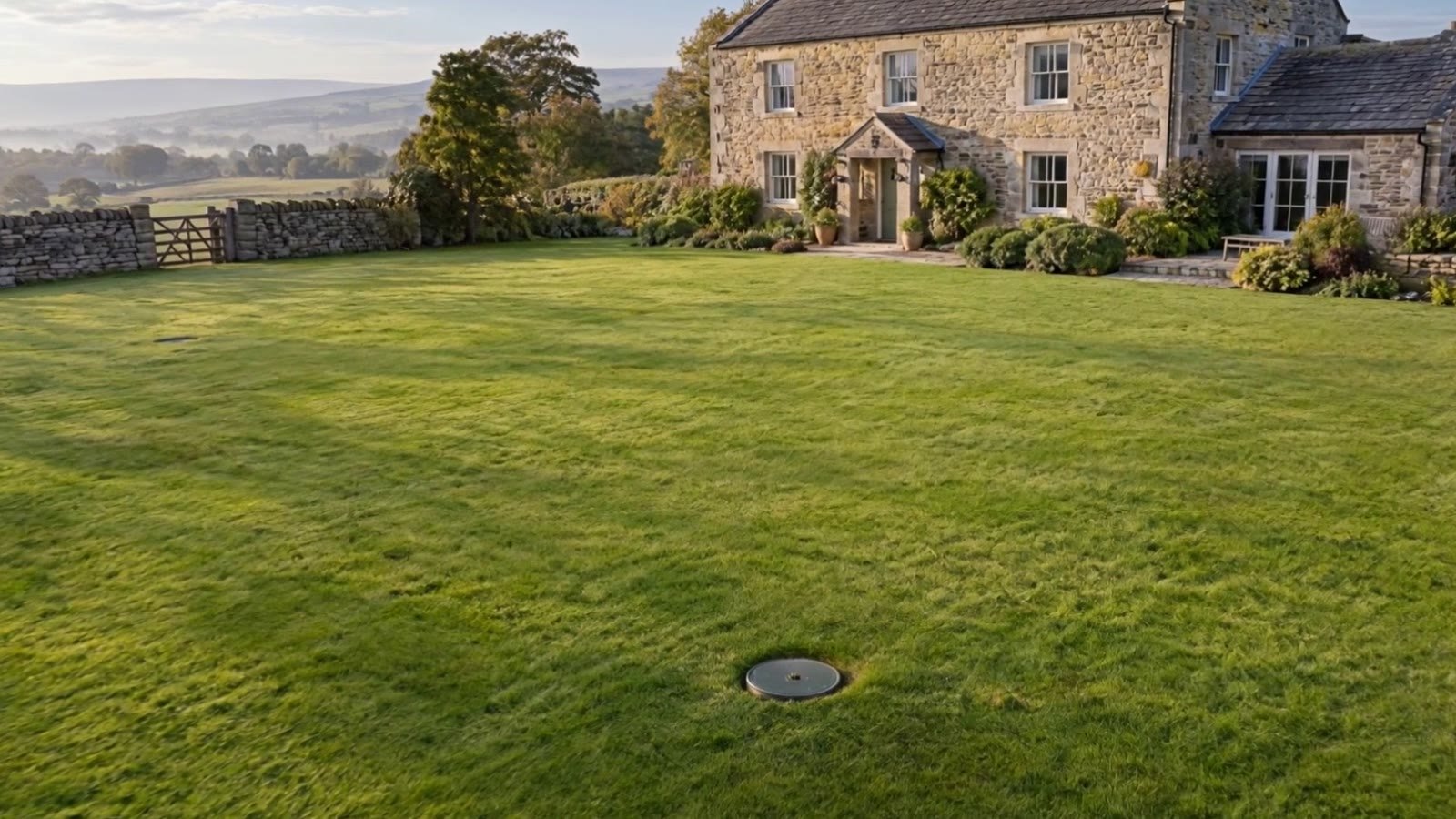
The usual first signs are drains that run slowly, gurgle or back up, and smells around the tank or the garden. Ground over the drainage field that stays wet, mushy or unusually green is another, as is needing the tank emptied more and more often.
Some reasons have nothing to do with how it performs. An older brick or single-chamber tank may be cracked or leaking. The tank may drain straight into a ditch, stream or river, which the rules no longer allow. A survey for a sale may have flagged it, or an extension may mean more people using it than it was built for.
The tank isn't always the problem. A blocked or waterlogged drainage field causes many of the same signs (see the warning signs). That's why we look at the whole system before anything is replaced.
The assessment
The assessment builds a picture of your system and your site, so the recommendation fits your property rather than a standard package.
Your options
A replacement septic tank isn't always the answer, and a septic tank upgrade to a treatment plant can be the better long-term choice. These are the main routes, and the assessment decides between them.
Option one
Option two
Option three
Option four
The process
This is the general shape of a project. The exact method depends on your site, the system chosen and the approvals needed.
What's there, how the property is used, and what's going wrong.
Ground testing where needed, routes for machinery, and where the wastewater can go.
A written recommendation, and a quote that says what's included and what isn't.
Building Regulations, any environmental permit, and planning where it applies.
The old tank is emptied, then removed, filled or made safe as agreed.
Checks suited to the system, reinstatement as agreed, and the paperwork handed over.
Cost
We don't publish standard prices, because two replacements rarely cost the same. These are the things that move the figure most. Read the full cost guide.
On site
Replacing a septic system is groundwork. Knowing what to expect makes it easier to plan around.
Afterwards
A good handover leaves you knowing what's in the ground and how to care for it. Keep the paperwork with the house, because a future buyer will ask for it.
You should come away with the product details and manufacturer's documents, a plan showing where the tank or plant and the drainage field sit, and any commissioning or test records. Where Building Regulations apply, there's completion paperwork too. You'll also get guidance on emptying, servicing and what not to put down the drains.
How often a system needs emptying or servicing depends on the unit, its size and how many people use it. Follow the manufacturer's guidance.
Questions
Sometimes. If the tank is sound, the right size and drains somewhere acceptable, a targeted repair may be enough. The assessment will tell you whether a repair is sensible or just a delay.
A replacement normally needs Building Regulations approval. If the new system can't meet the general binding rules, an environmental permit may be needed, and planning can apply in some cases. Your quote should say which apply.
It depends on the system you need, ground conditions, access, the distance to the drainage field or outlet, and how the garden is put back. We don't quote a figure without seeing the site, but your quote will break down each of these so you can compare it fairly.
Often, yes. Upgrading to a domestic sewage treatment plant is common where a septic tank drains into a ditch or stream, or where the ground won't take a new drainage field. Treatment plants need electricity and regular servicing.
It depends on the system, the ground, access, the weather and approvals. You'll get an expected timescale for your site after the assessment, not a standard figure that may not apply.
There's usually a period when the drains can't be used while the old system is disconnected and the new one connected. Ask how long that's likely to be and what temporary arrangements are possible.
It's emptied by a licensed waste carrier first. Then it's removed, broken down and filled, or made safe in place, depending on the site and what's agreed.
Tell us what you've noticed. Photos of the access covers or the area around the system help if you have them, but they're optional. We'll tell you what's worth looking at first.
Tell us what's happening and roughly where you are. No need to know what type of system you have.