Based on the Environment Agency's general binding rules on gov.uk, checked October 2026. Read the official guidance.
What the rules say
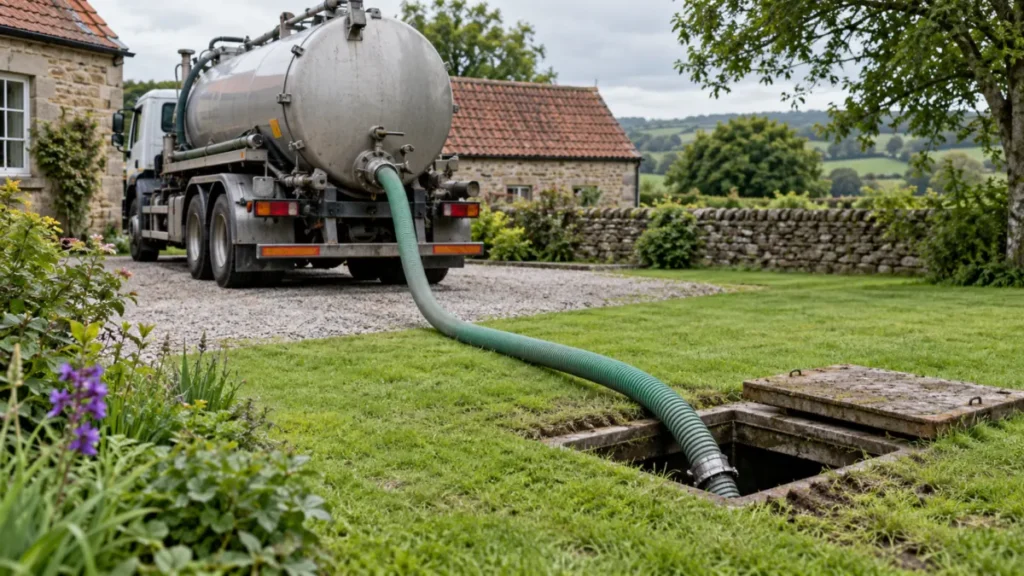
The general binding rules say you must have the sludge emptied at least once a year, or in line with the manufacturer's instructions, before the tank reaches capacity. The waste must be removed by a registered waste carrier.
What affects how quickly it fills
The size of the tank, how many people live in the property, how much water you use, and what goes down the drains all play a part. A small tank serving a large household fills faster than a large tank serving two people.
Signs it's overdue
Slow drains, smells near the covers, and wet ground over the drainage field can all mean the tank is too full and solids are being carried into the drainage field. That can damage the field, which is far more expensive to put right than an emptying.
Treatment plants
Sewage treatment plants need emptying too, plus regular servicing of their pumps and other parts, following the manufacturer's schedule.
When emptying isn't enough
If a tank fills unusually quickly, or the garden stays wet even after emptying, the problem is usually the drainage field or the tank itself. That's when a survey or replacement is worth looking at.
Want a clear answer for your property?
Tell us what's happening and roughly where you are. No need to know what type of system you have.