Regulatory points checked against GOV.UK guidance on the general binding rules for small sewage discharges in England, October 2026.
Brick and concrete tanks
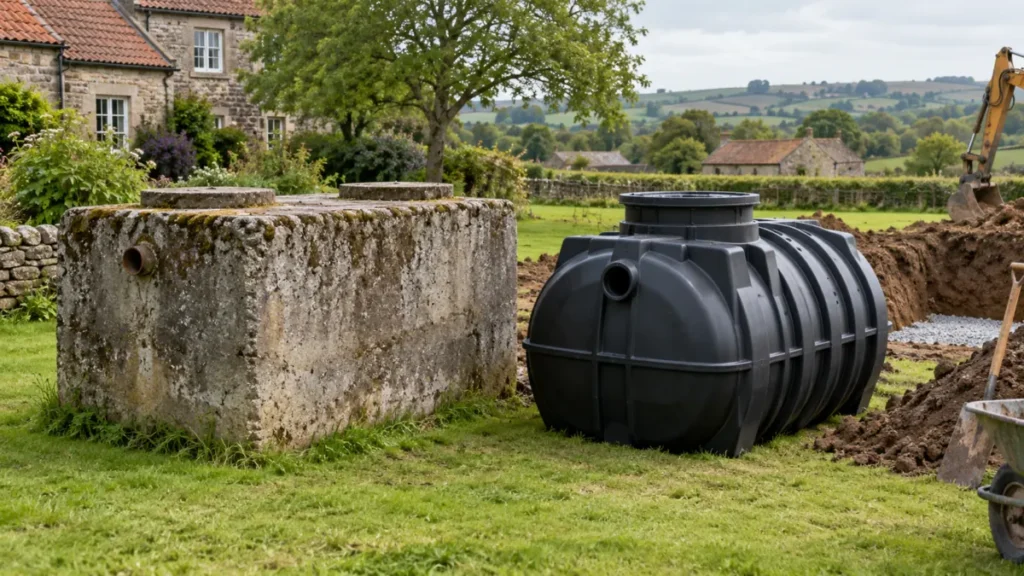
Many older rural properties have tanks built on site from brick or cast concrete, sometimes with a single chamber. They're heavy and can last a long time, but brick and mortar can crack and leak with age, and baffles and fittings deteriorate. A leaking tank lets untreated sewage into the ground, which the general binding rules don't allow: a system that isn't in good working order must be repaired or replaced.
Plastic and GRP tanks
Most modern tanks are factory-made from polyethylene or GRP. They're light, so they're easier to get onto awkward sites, and they arrive watertight with the chambers and fittings already in place. Tanks and treatment plants should meet the relevant British Standard (BS EN 12566).
Installation differences
Plastic tanks are light, which is an advantage until the ground is wet. In a high water table an empty plastic tank can float, so they're often installed with a concrete surround or anchoring, following the manufacturer's instructions. Concrete tanks are heavy enough not to float but need bigger machinery to place.
Which is better?
For a replacement, a modern factory-made unit is usually the practical choice, but the bigger question is often whether a septic tank is the right system at all. If the property can't have a suitable drainage field, or currently drains to a watercourse, a sewage treatment plant may be the better answer.
Repair or replace?
Small cracks and broken fittings in an otherwise sound concrete tank can sometimes be repaired. A tank that's breaking up, too small for the household, or can't meet the rules is usually better replaced.
Want a clear answer for your property?
Tell us what's happening and roughly where you are. No need to know what type of system you have.