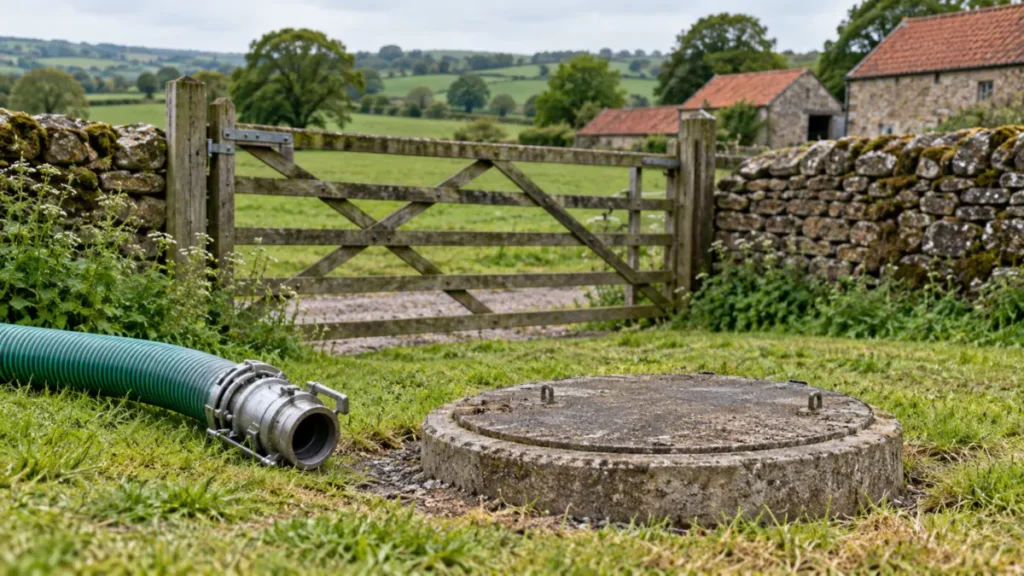
A cesspool is a sealed holding tank
A cesspool (also called a cesspit) collects all the wastewater from the property and stores it. Nothing leaves the tank, so it has to be emptied by tanker whenever it fills, which can be every few weeks for a busy household.
A septic tank separates and discharges
A septic tank separates solids from liquid. The settled liquid flows out to a drainage field, where the soil treats it further. Only the sludge needs emptying, typically once a year or as the manufacturer recommends.
Running costs
Because cesspools need emptying so often, they're usually far more expensive to run than a septic tank or treatment plant. They tend to be a last resort, for sites where nothing can be discharged at all.
Buying a property with a cesspool
Ask how often it's emptied and what that costs each year, and check its condition. Sometimes converting to a treatment plant or septic tank with a drainage field is possible and can cut running costs, depending on the site.
Want a clear answer for your property?
Tell us what's happening and roughly where you are. No need to know what type of system you have.